
Best Resin 3D Printers for Scale Models & 1/35 Upgrades (2026 Guide)


Best Resin 3D Printers for Scale Models, 1/35 Armor & 1/48 Aircraft Upgrades (2026 Buyer’s Guide)
Choosing the best resin 3D printer for scale models has fundamentally changed how we build armor, aircraft, and sci-fi kits. Just a few years ago, scratch-building an accurate cockpit instrument panel or replacing vinyl tank tracks required weeks of painstaking styrene work or expensive photo-etch brass. Today, desktop MSLA (Masked Stereolithography) printers with sub-20-micron XY resolution allow hobbyists to print microscopic rivets, hollow exhaust nozzles, and workable track links right on their workbench.
Whether you are printing aftermarket upgrades similar to Reskit’s 1/32 F-16C Block 50/52 Cockpit, full-resin engineering kits like the 3D-WILD 1/35 M105 DEUCE Earthmover, or braille-scale anti-aircraft guns like the Kaliber38mm 3D-Printed ZU-23-2, the secret lies in matching XY pixel size, build volume, and resin chemistry to your preferred modeling scale.
Disclosure: Hobbyzero is reader-supported. When you buy through links on our site, we may earn an affiliate commission at no extra cost to you. As an Amazon Associate, we earn from qualifying purchases.
2026 Top Resin 3D Printers for Scale Modelers: Spec Comparison
| Printer Model | Best Modeling Use Case | Resolution & XY Pixel | Build Volume | Check Price |
|---|---|---|---|---|
| Elegoo Saturn 4 Ultra (16K) | Best Overall (1/35 Armor & 1/32 Aircraft) | 16K (14 × 19 µm) | 211 × 118 × 220 mm | View on Amazon |
| Anycubic Photon Mono M7 Pro | Best High-Speed (Batch Track Links) | 14K (16.8 × 24.8 µm) | 223 × 126 × 230 mm | View on Amazon |
| Phrozen Sonic Mini 8K S | Best Precision (1/72 & 1/48 Cockpits) | 8K (22 µm square) | 165 × 72 × 170 mm | View on Amazon |
| Uniformation GK3 Ultra | Best Large Format (1/16 & Dioramas) | 16K (20 × 26 µm) | 300 × 160 × 300 mm | View on Amazon |
| Elegoo Mars 5 Ultra | Best Compact (Gunpla & Figures) | 9K (18 × 18 µm) | 153 × 77 × 165 mm | View on Amazon |
1. Elegoo Saturn 4 Ultra (16K) — Best Overall for 1/35 & 1/48 Scale
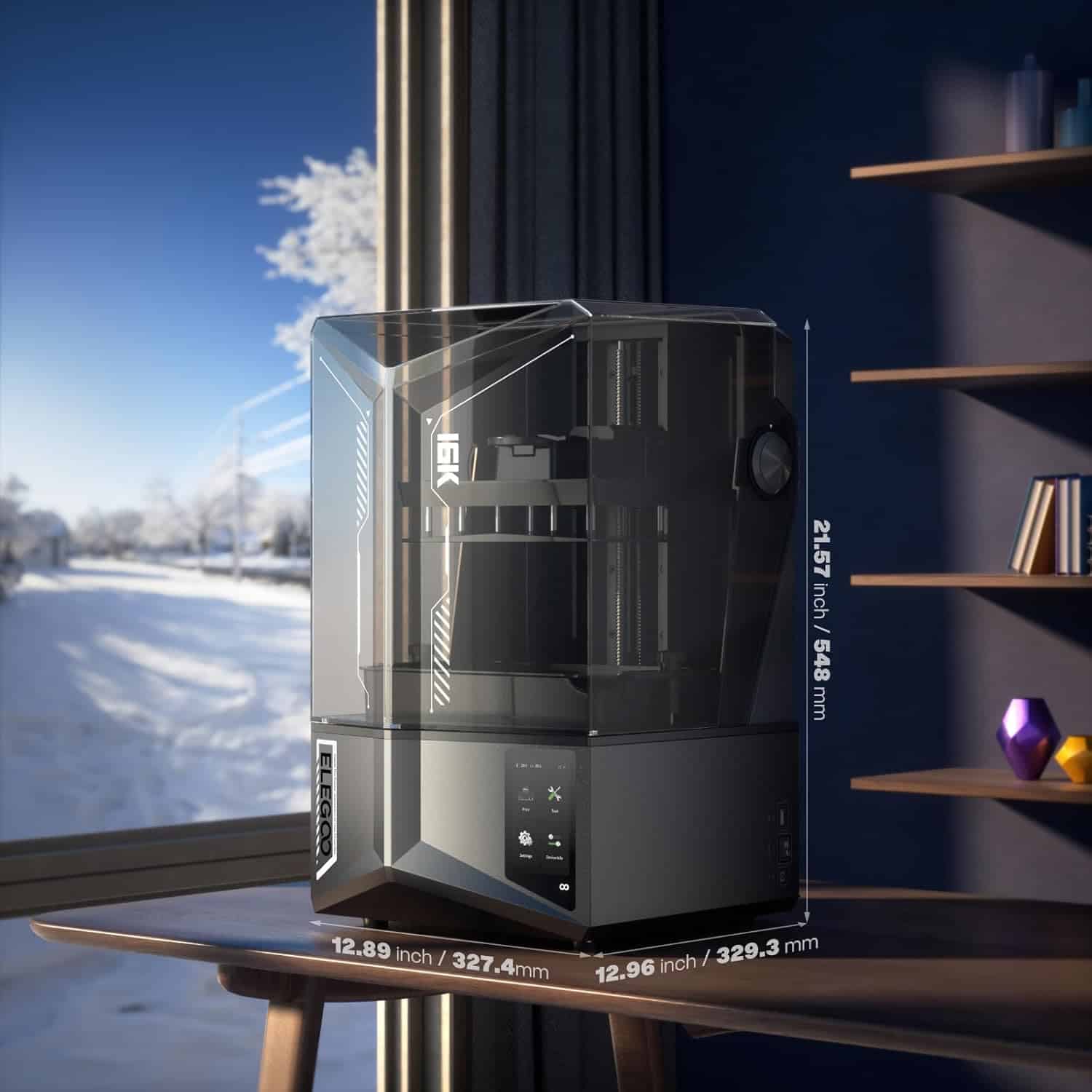
✅ Pros for Scale Modelers:
- 14 × 19 µm resolution renders microscopic rivets and cockpit dials effortlessly
- Tilt-release vat reduces peel force on delicate 1/72 landing gear and antennas
- True plug-and-play mechanical auto-leveling
❌ Cons to Consider:
- Flip-up lid requires vertical clearance above your workbench
- High-resolution 16K sliced files (.goo / .ctb) are large in file size
2. Anycubic Photon Mono M7 Pro — Best High-Speed Printer for Batch Track Links & Figures
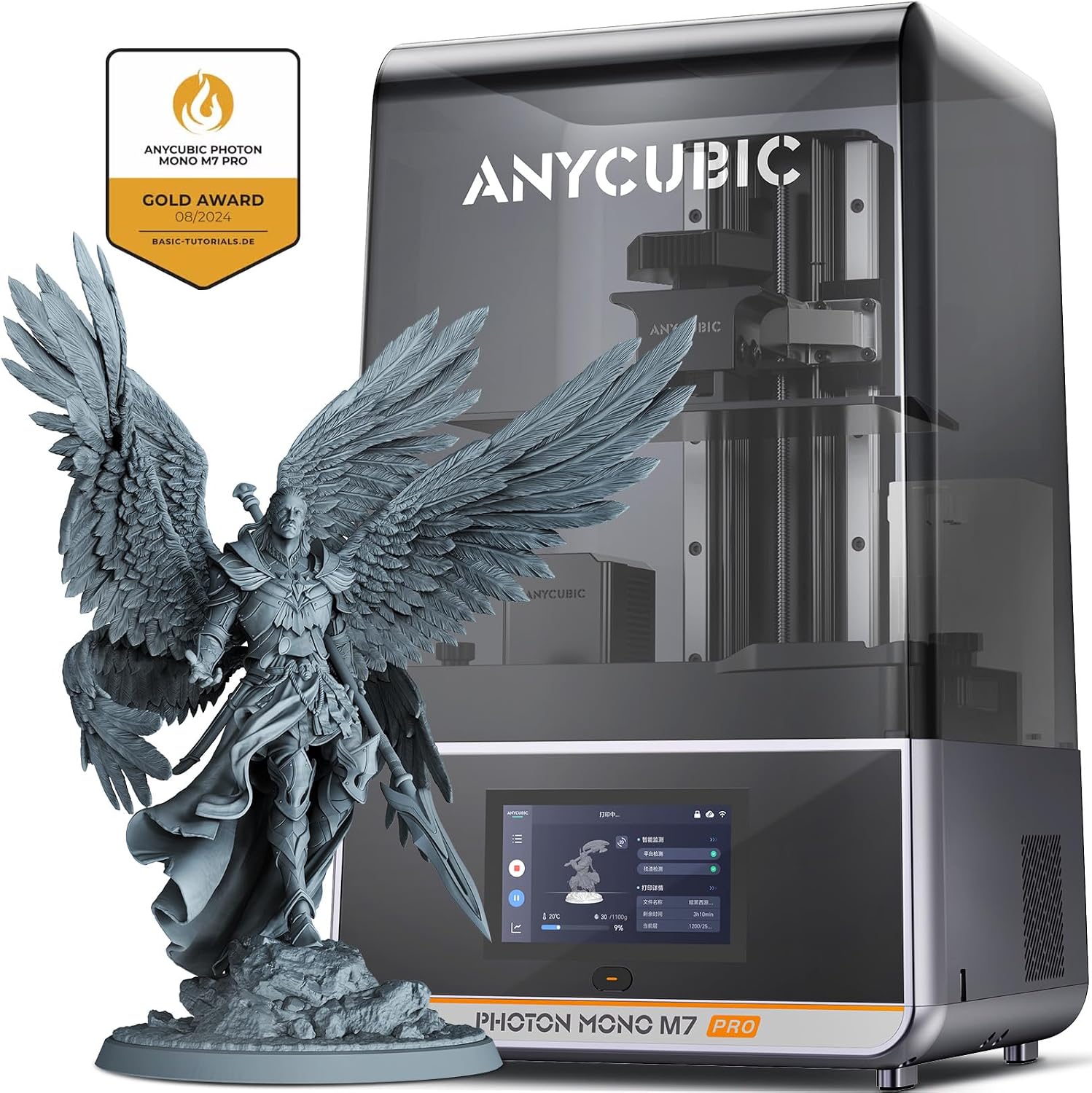
If your workbench routine involves printing 200 individual workable tank track links, complete 1/35 engine compartments, or an entire squad of figures in a single afternoon, the Anycubic Photon Mono M7 Pro is built for sheer throughput. Its 14K monochrome LCD (16.8 × 24.8 µm) is paired with a circulating heated resin vat that automatically brings cold resin up to optimal working temperature (25°C–30°C) before the build plate even lowers.
✅ Pros for Scale Modelers:
- Built-in circulating resin heater prevents print failures in cold garages or winter hobby rooms
- Generous 223 × 126 × 230 mm build volume fits full 1/35 tank hulls and 1/48 aircraft fuselages
- COB LighTurbo 3.0 optical source delivers ultra-crisp vertical edges on armor plates
❌ Cons to Consider:
- Auto-refill/heating pump tubes require extra IPA flushing when switching resin colors
- ACF release film Included for high speed can slightly soften microscopic textures unless swapped for PFA (nFEP)
3. Phrozen Sonic Mini 8K S — Best Precision for 1/72 & 1/48 Cockpit Aftermarket
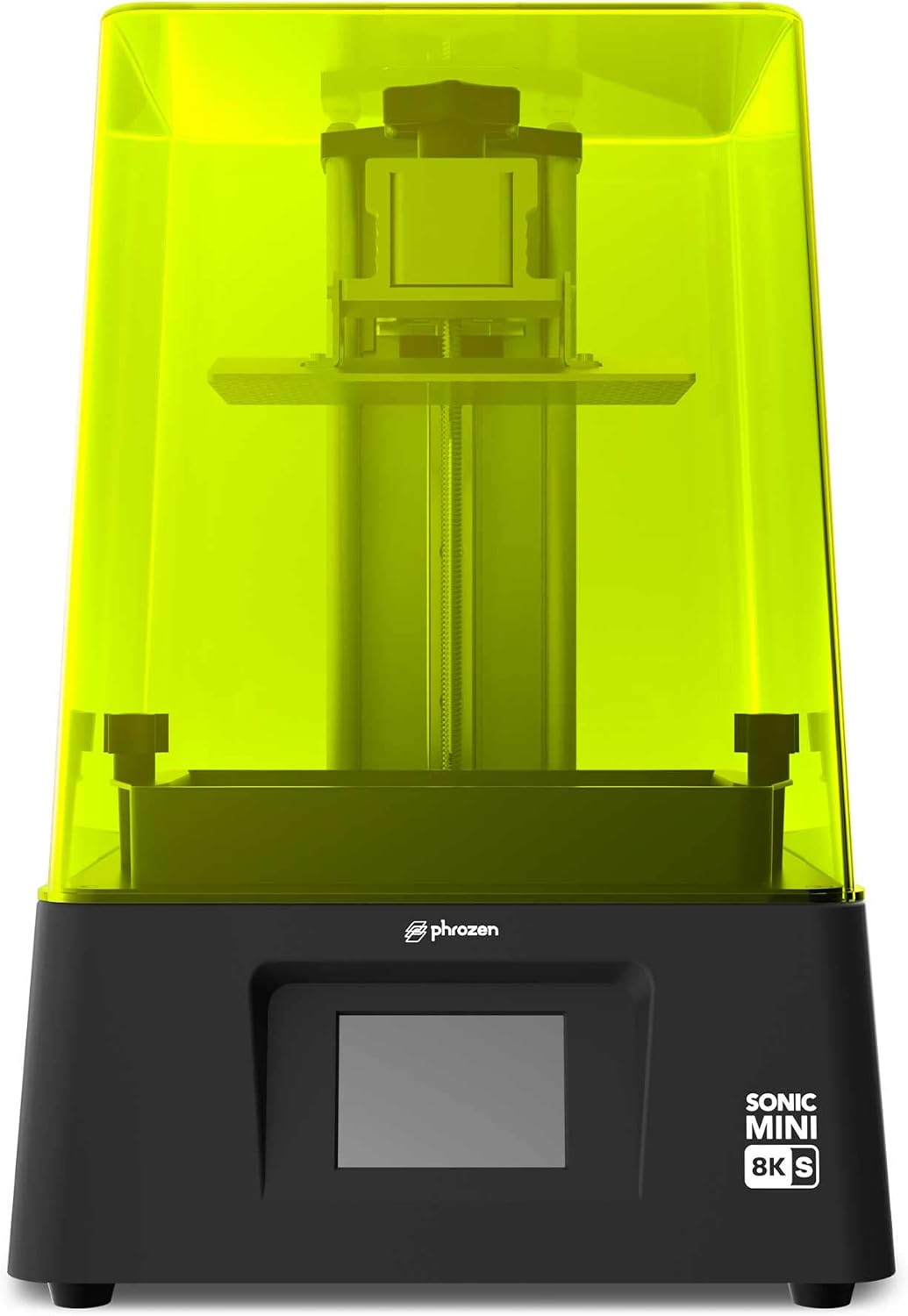
For aviation and braille-scale modelers who obsess over 1/72 ejection seat harness buckles, radar arrays, and 1/48 exhaust petals, pixel shape matters just as much as pixel count. Unlike newer rectangular-pixel screens, the Phrozen Sonic Mini 8K S utilizes true 22-micron isotropic (square) pixels. This eliminates directional aliasing on compound curves like aircraft radomes, pitot tubes, and miniature faces.
✅ Pros for Scale Modelers:
- True 22 µm square pixels produce zero voxel stepping on curved canopies and nose cones
- Frosted laser-cut build plate offers rock-solid adhesion for tiny aftermarket parts
- Compact vat uses minimal resin, making it economical for expensive engineering resins
❌ Cons to Consider:
- Smaller 7.1-inch build plate (165 × 72 × 170 mm) is too narrow for one-piece 1/35 tank hulls
- Single linear rail requires manual 4-point paper leveling out of the box
4. Uniformation GK3 Ultra — Best Large-Format Printer for 1/16 Armor & Diorama Bases
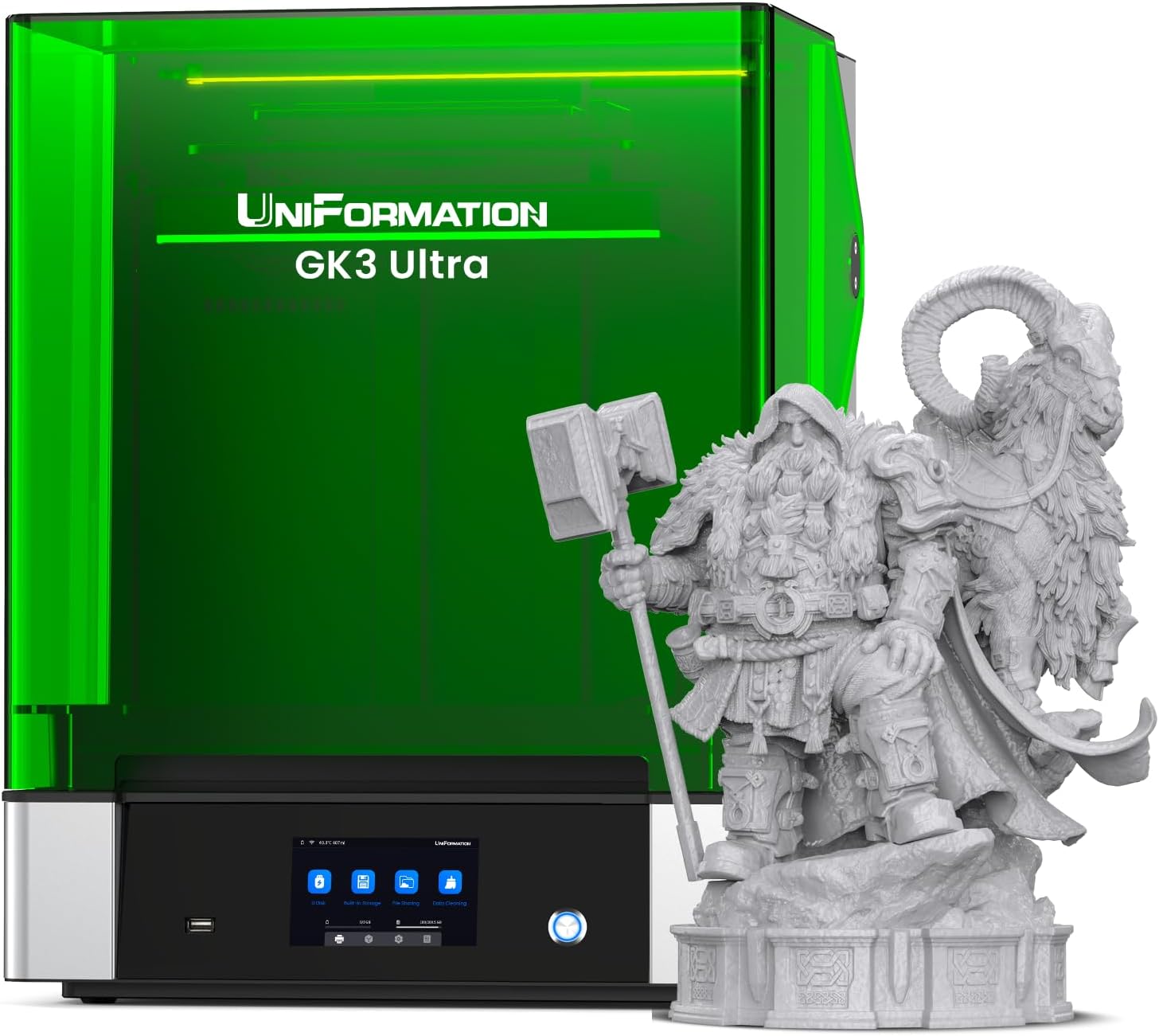
Large-scale builders working on 1/16 armor, 1/24 aircraft, or full architectural WW2 diorama buildings often struggle with splitting models into dozens of keyed sections. The Uniformation GK3 Ultra solves this with a massive 13.5-inch 16K screen (300 × 160 × 300 mm build volume) while retaining a sharp 20 × 26 µm resolution. Its quick-release build plate clamp and drawer-style resin vat make it the cleanest large-format machine on the market.
✅ Pros for Scale Modelers:
- Massive 300 mm Z-axis height prints 1/16 tank hulls, ship hulls, and diorama facades in one piece
- Integrated PTC ceramic heater and flip-up hinged cover designed specifically for hobbyists
- Quick-release cam lever lets you remove the build plate in two seconds without resin dripping on screws
❌ Cons to Consider:
- Heavy footprint and premium price point compared to mid-sized 10-inch printers
- Requires at least 800 ml to 1 liter of resin in the vat to keep the bottom fully submerged
5. Elegoo Mars 5 Ultra — Best Compact Workbench Printer for Gunpla, Figures & 1/72 Upgrades
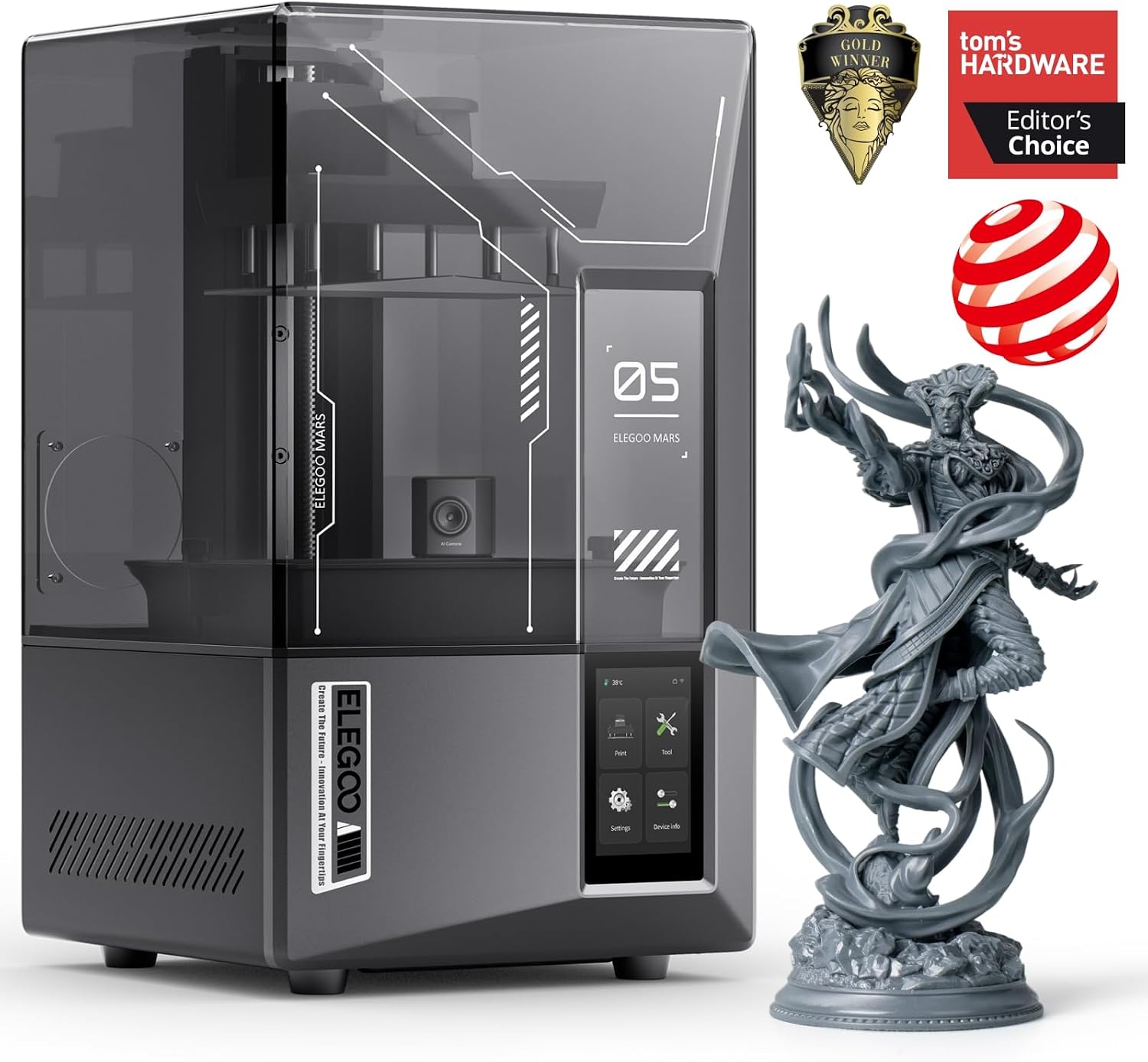
Not every modeler has room for an industrial-sized machine next to their spray booth. The Elegoo Mars 5 Ultra takes the flagship tilt-release peeling mechanism from the Saturn 4 Ultra and shrinks it into a 7-inch 9K form factor with an ultra-dense 18 × 18 µm isotropic pixel size. It is the ultimate entry point for printing custom Gunpla thrusters, Warhammer 40K shoulder pads, 1/48 wheels, and 1/35 stowage sets.
✅ Pros for Scale Modelers:
- 18 µm square pixels rival dedicated jewelry printers for sharpness on small-scale parts
- Tilt-release vat peels layers gently, preventing delicate 1/72 gun barrels from bending
- Budget-friendly entry price with zero-hassle automatic leveling
❌ Cons to Consider:
- Compact 153 × 77 × 165 mm build volume requires slicing larger 1/35 vehicle bodies into sections
- No built-in chamber heater (requires an external fermentation belt or mini heater in cold rooms)
Why XY Resolution Matters More Than “8K vs 16K” Marketing
When shopping for the best resin 3D printer for scale models, manufacturers love to advertise massive “12K”, “14K”, or “16K” numbers. However, a 12K screen stretched across a huge 10-inch build plate can actually have larger pixels than an 8K screen compressed into a compact 7-inch plate.
For scale modelers, two measurements dictate whether your parts look like injection-molded styrene or stepped topographical maps:
-
XY Pixel Size (Measured in Microns – µm): Anything under 24 microns (µm) is virtually invisible to the naked eye once primed. At 14 to 22 microns, you can print readable cockpit placards, 1/72 machine gun cooling jackets, and weld beads without sanding.
-
Rectangular vs. Square Pixels: Many modern 12K and 14K screens use rectangular pixels (e.g., 17 × 24 µm). To avoid faint stepping lines on curved aircraft fuselages or nose cones, orient your parts at a 35° to 45° angle and enable 2x Anti-Aliasing (AA) with 20% gray level in Lychee or Chitubox slicer.
Choosing the Right Printer by Modeling Scale
1. 1/72 & 1/48 Aircraft Aftermarket (Cockpits, Exhausts, Landing Gear)
In quarter-scale and braille-scale aviation, dimensional accuracy and crisp surface detail are everything. A compact printer like the Phrozen Sonic Mini 8K S or Elegoo Mars 5 Ultra delivers an ultra-dense pixel grid. When printing replacement landing gear struts, always blend 80% ABS-Like Resin with 20% Tough/Flexible Resin so the struts don’t snap under the weight of the fuselage over time.
2. 1/35 Armor, Workable Tracks & Conversion Sets
If you enjoy heavy armor conversions—such as upgrading a 1/35 Leopard 2A8 or printing full chassis kits like the 3D-Printed British Humber F.W.D 4×4—you need a mid-sized 10-inch build plate. The Elegoo Saturn 4 Ultra or Anycubic Photon Mono M7 Pro allows you to print an entire tank hull or 180 workable track links plus pins in a single 3-hour batch.
3. Gunpla, Warhammer 40K & Sci-Fi Customizing
Customizing mecha armor panels or building rebel hangars from our Ultimate Star Wars Starfighter Guide requires sharp geometric edges that don’t warp during UV curing. Look for printers with COB (Chip-on-Board) + Fresnel Collimating Lens light sources, which ensure 92%+ light uniformity across the entire screen so flat armor plates snap together without gaps.
Essential Workbench Checklist: Bonding, Priming & Painting 3D Resin
Unlike traditional polystyrene kits, cured UV photopolymer resin does not react with plastic solvent cements. To integrate 3D-printed parts seamlessly into your next build, follow these workbench rules:
-
Gluing Resin to Styrene: Standard liquid poly cement will not melt UV resin. Always use medium-viscosity cyanoacrylate (CA) super glue or two-part epoxy. Check out our complete breakdown on What’s the Best Glue for Plastic Models? for exact brand recommendations and accelerator tips.
-
Washing & Post-Curing: Wash fresh prints in two separate stages of 99% Isopropyl Alcohol (IPA)—a “dirty” bath to strip bulk resin, followed by a “clean” ultrasonic or vortex bath. Allow parts to dry completely before UV curing for 2–3 minutes; curing wet resin leaves chalky white streaks in panel lines.
-
Priming & Acrylic Painting: Always apply a micro-filler lacquer or polyurethane primer before brushing or airbrushing. Once primed, 3D resin accepts water-based acrylics identically to styrene—follow our Painting Models with Acrylic Paint Beginner’s Guide for thinning ratios.
-
Panel Lining Safety: Unlike bare ABS Gunpla frames, cured 3D resin is completely immune to enamel thinner cracking! You can safely apply enamel washes or acrylic inks using the techniques in our Tamiya Panel Line vs Ink Wash Showdown.
🛠️ Recommended Resins & Wash Accessories for Scale Modelers
Never use brittle “Standard” resin for scale model parts—one drop onto the workbench floor will shatter a 1/48 landing gear strut. Here is the exact resin chemistry and curing combo we recommend:
- 🔹 Best Detail & Durability Blend: Siraya Tech Fast ABS-Like Navy Grey (1kg) — Matte grey pigment reveals micro-surface details just like Mr. Surfacer 1500 primer.
- 🔹 Best for Workable Tank Tracks & Thin Barrels: Sunlu ABS-Like / Tough Resin — High flex modulus prevents snapping when clicking 1/35 track pins together.
- 🔹 Best Wash & UV Cure Station: Elegoo Mercury XS Wash & Cure Bundle — Includes a handheld UV wand for curing inside hollow 1/35 tank hulls.
- 🔹 Workbench Respiratory Safety: 3M Half Facepiece Reusable Respirator + 6001 Organic Vapor Cartridges — Essential for both UV resin fumes and lacquer airbrushing.
Frequently Asked Questions (FAQ)
What layer height should I use for 1/35 and 1/48 scale model parts?
For 90% of armor and aircraft detail parts, a 0.03 mm (30-micron) layer height offers the ideal balance between print speed and invisible layer lines. For ultra-fine 1/72 ejection seats, instrument dials, or miniature faces, drop your layer height to 0.02 mm (20 microns).
Why do my 3D-printed scale model parts warp or shrink after curing?
Dimensional shrinkage happens when standard brittle resin is over-cured or hollowed with walls thinner than 1.5 mm. Switch to an ABS-Like or Engineering Low-Shrinkage Resin, calibrate your exposure using the Cones of Calibration V3, and cure thin parts submerged in a clear container of water to distribute UV heat evenly.
Can I run a resin 3D printer in an apartment or small hobby room?
Yes, provided you manage Volatile Organic Compounds (VOCs). Choose a printer with an enclosed heated chamber, vent it directly out a window using a 4-inch inline duct fan (the same exhaust setup used for an airbrush spray booth), and use low-odor ABS-like resins instead of harsh monomer formulas.
