
Slapchop vs Zenithal Highlighting: Speed Painting Miniatures & Figures

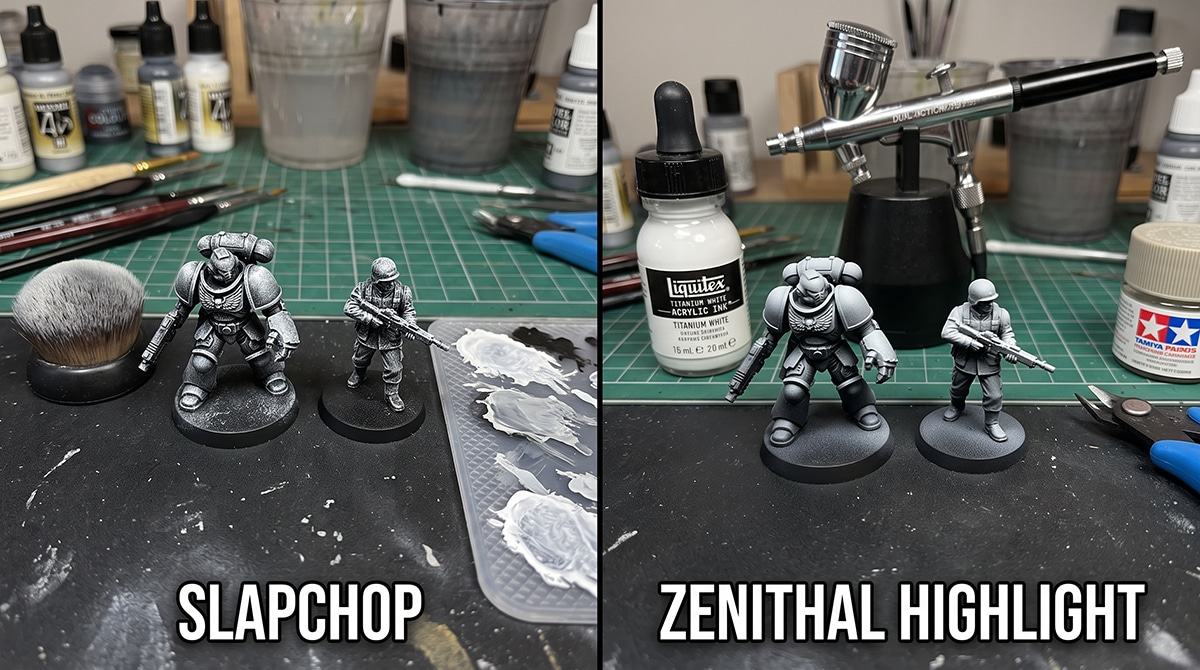
Slapchop vs Zenithal Highlighting: Speed Painting Miniatures & Scale Model Figures (2026 Guide)
The debate over Slapchop vs Zenithal Highlighting has completely reshaped how hobbyists paint Warhammer 40K armies, tabletop wargaming miniatures, and 1/35 scale military figures. Instead of spending four hours layering basecoats, washes, and edge highlights on a single infantryman, modern “value sketching” (or grisaille underpainting) lets you establish dramatic light, shadow, and volumetric contrast before a single drop of color touches the model.
Once your black-to-white grayscale undercoat is locked in, translucent acrylic glazes—such as Citadel Contrast, The Army Painter Speedpaint 2.0, or Vallejo Xpress Color—act like a stained-glass filter over the surface. Whether you are painting a 2,000-point Space Marine strike force, detailing the crew from the 3D-WILD 1/35 M105 DEUCE Earthmover, or bringing a 1/24 vignette like Master Box’s “All the Way!” 82nd Airborne Figure to life, choosing between a drybrushed Slapchop sketch and an airbrushed Zenithal gradient determines your final texture and speed.
Disclosure: Hobbyzero is reader-supported. When you buy through links on our site, we may earn an affiliate commission at no extra cost to you. As an Amazon Associate, we earn from qualifying purchases.
Slapchop vs. Zenithal Highlighting: Head-to-Head Comparison
| Feature / Criteria | Slapchop Technique (Drybrush Undercoat) | Zenithal Highlighting (Airbrush / Rattlecan) |
| Core Mechanism | Mechanical pigment deposition on raised edges & ridges via dome drybrushes | Directional spray mimicking overhead sunlight (45° & 90° angles) |
| Best Model Subjects | Highly textured miniatures (fur, chainmail, skulls, 1/35 webbing, grimdark armor) | Smooth armor plates, Space Marines, Gunpla, aircraft cockpits & female figures |
| Surface Finish | High micro-contrast with crisp, automatic edge highlights (can look chalky if rushed) | Silky-smooth volumetric gradients with natural directional shadows |
| Equipment Required | Black Primer + Grey/White Acrylics + Round Dome Drybrushes (Zero airbrush needed) | Airbrush (or 2 Spray Cans) + Black, Grey & White Ink/Primer |
| Speed per 10 Figures | ~25 Minutes (Hands-on brushing) | ~10 Minutes (Spray time, excluding drying) |
2026 Best Speed Painting & Value Sketching Products Compared
| Product Name | Role in Workflow | Key Advantage | Best Technique Match | Check Price |
|---|---|---|---|---|
| The Army Painter Masterclass Drybrush Set | Dome Drybrushing | Ultra-soft goat hair prevents chalky streaks | Slapchop & 1/35 Dioramas | View on Amazon |
| Army Painter Speedpaint 2.0 Mega Set | One-Coat Translucent Glaze | Reactivation-free resin formula with intense shading | Both Slapchop & Zenithal | View on Amazon |
| Harder & Steenbeck Ultra 2024 Airbrush | Precision Zenithal Spraying | 0.45mm nozzle + trigger collar prevents speckling | Zenithal Highlighting | View on Amazon |
| Liquitex Professional Titanium White Ink | High-Pigment White Halo | Ultra-fine pigment atomizes with zero tip-dry grain | Airbrush Zenithal | View on Amazon |
| Vallejo Surface Primer Black & Grey Combo | Polyurethane Basecoat | Self-leveling matte grip shrinks tight over details | Foundation for All Figures | View on Amazon |
How the “Slapchop” Method Works (And Why Everyone Uses It)
Coined by the tabletop community, Slapchop is a three-stage drybrushing workflow designed to mimic a 3D ambient occlusion render without ever touching an airbrush:
-
Stage 1 – Dead-Flat Black Base: Prime the miniature completely in matte black polyurethane or lacquer primer so every deep recess, armpit, and fold starts in pure shadow.
-
Stage 2 – Heavy Mid-Tone Grey Drybrush: Using a large, rounded dome drybrush loaded with medium neutral grey (such as Mechanicus Standard Grey or Vallejo Neutral Grey), sweep aggressively across 75% of the model from top to bottom.
-
Stage 3 – Targeted Pure White Edge Catch: Switch to a smaller dome brush with pure titanium white and lightly kiss only the uppermost focal points—the brow, helmet crest, knuckles, rifle barrel, and knee pads.
The Secret to Avoiding Chalky Slapchop Texture: Never wipe your drybrush on a dry paper towel! Paper towels suck all the acrylic moisture out of the paint, leaving dry, clumpy pigment dust on the bristles. Instead, discharge excess paint on a non-absorbent texture palette (or spare primed sprue pieces) and keep a tiny hint of moisture in the brush ferrules. For more foundational brushwork tips, check out our Painting Models with Acrylic Paint: Complete Beginner’s Guide.
How Zenithal Highlighting Works (The Airbrush & Spray Can Standard)
Named after the zenith (the highest point of the sun in the sky directly overhead), Zenithal Highlighting relies on real-world physics rather than bristle friction:
-
90° All-Over Black Primer: Coat the entire figure in matte black.
-
45° Mid-Grey Halo: Spray neutral grey at a 45-degree downward cone around the figure, leaving the undersides of capes, chins, and boots in black shadow.
-
Top-Down (0° Zenith) White Spot-Light: Spray thinned White Acrylic Ink straight down from directly above the head and shoulders.
Because atomized ink droplets create a seamless transition from dark to light, Zenithal priming shines on broad, curved surfaces—like Warhammer Space Marine pauldrons, sci-fi hulls, or 1/35 tank commanders—where a drybrush would leave visible scratch marks.
Top 5 Tools & Paints for Slapchop and Zenithal Workflows (Pros & Cons)
1. The Army Painter Masterclass Drybrush Set (3-Pack) — The Ultimate Slapchop Tool
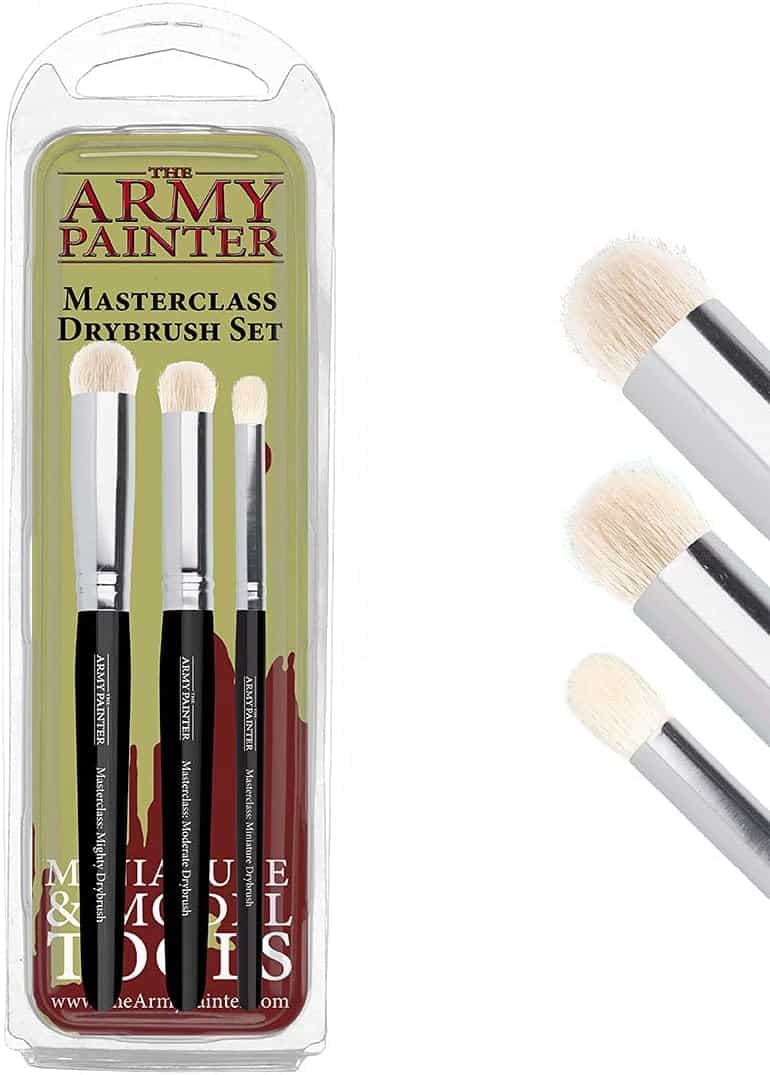
If you have ever tried the Slapchop technique using an old, stiff, flat-headed synthetic brush, you already know how frustrating chalky streaks can be. The Army Painter Masterclass Drybrush Set uses densely packed, ultra-soft rounded dome bristles (inspired by professional makeup stippling brushes) that buff grey and white pigment smoothly across raised armor plates and 1/35 uniform folds.
✅ Pros for Scale Modelers:
- Rounded dome profile glides over flat armor panels without leaving linear brush tracks
- Includes three graduated sizes for 1/35 vehicles, 28mm infantry, and tiny facial features
- Soft natural bristles retain micro-moisture, preventing dusty or grainy white highlights
❌ Cons to Consider:
- Must be washed gently with brush soap and allowed to dry completely between sessions
- Not suitable for metallic enamel drybrushing (strictly use water-based acrylics)
2. The Army Painter Speedpaint 2.0 Mega Set — Best One-Coat Translucent Glaze System
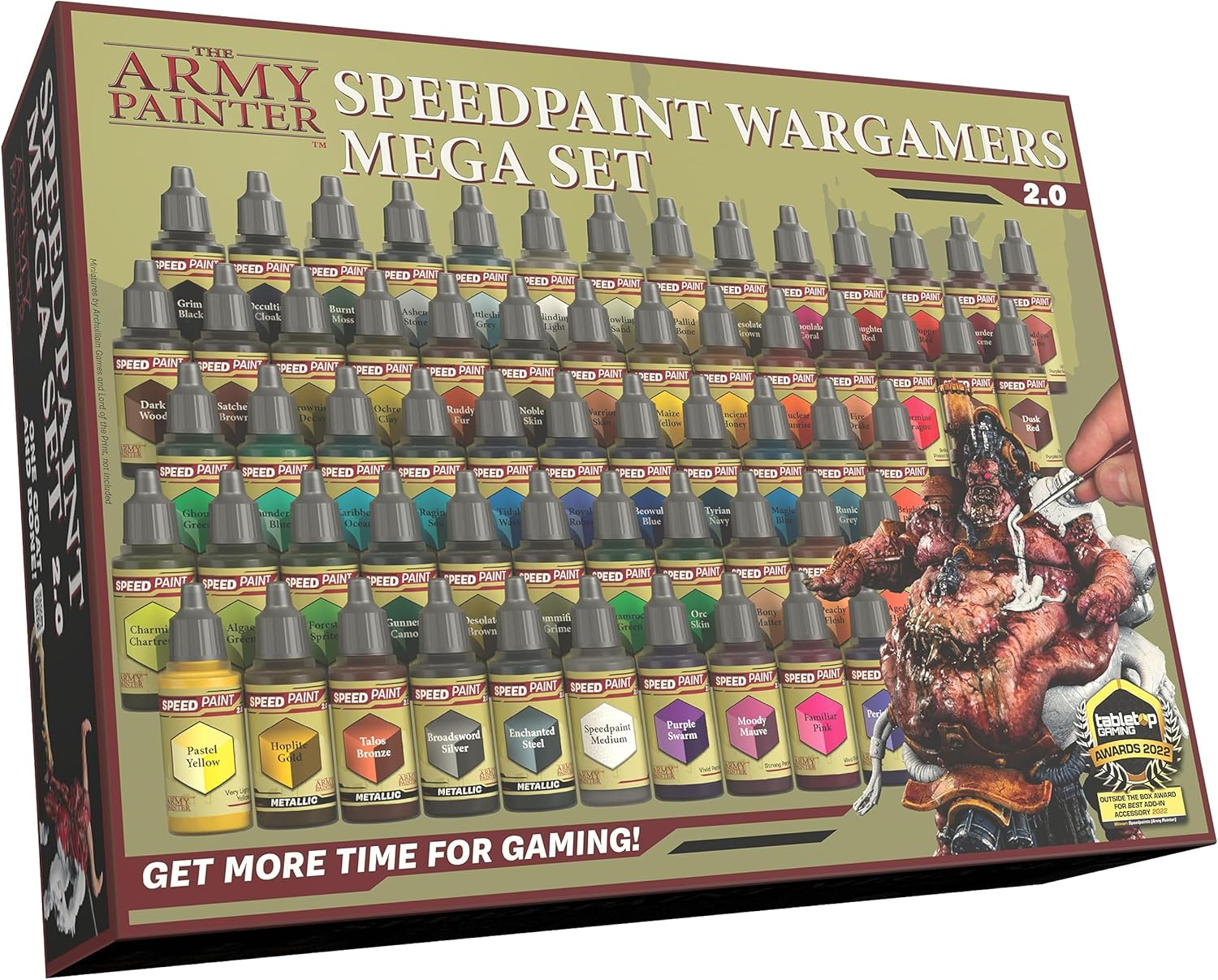
A grayscale undercoat is only half the equation—you need a high-flow translucent paint to convert that black-and-white sketch into vibrant color. The Army Painter Speedpaint 2.0 solved the biggest complaint of first-generation speedpaints by eliminating reactivation when layering. Every 18ml dropper bottle comes pre-loaded with two stainless steel mixing balls for instant workbench use.
✅ Pros for Scale Modelers:
- Dries permanently without reactivating when you apply highlights or weathering washes over top
- Smoother flow on flat surfaces (less coffee-staining) than traditional contrast formulas
- Precision dropper bottles prevent accidental spills and work seamlessly with airbrushes
❌ Cons to Consider:
- Requires a bright white top drybrush or zenithal pass—colors look dull over dark grey alone
- Should not be placed on a wet palette (water dilutes the specialized resin flow medium)
3. Harder & Steenbeck Ultra 2024 Airbrush — Best Precision Airbrush for Zenithal Priming
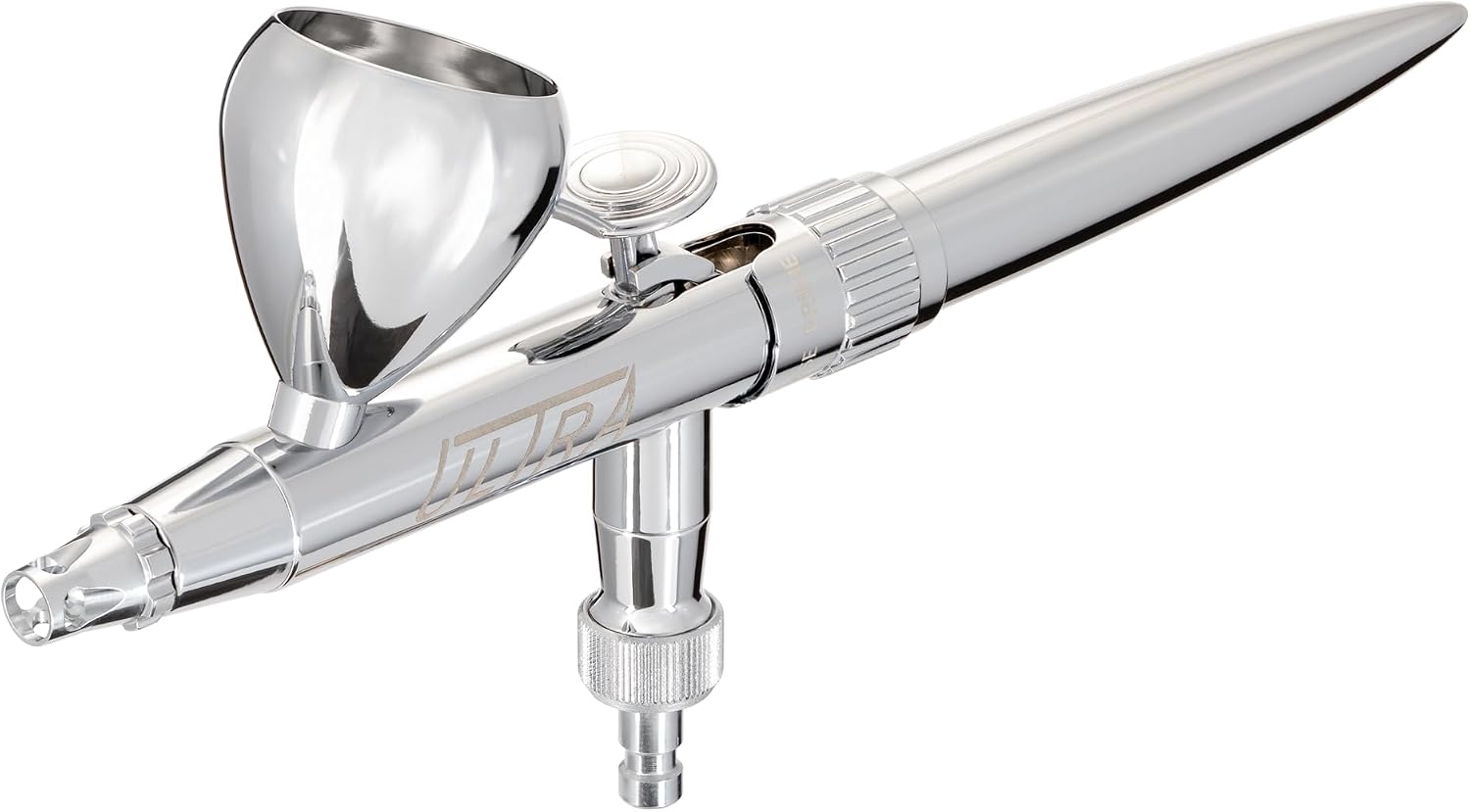
The biggest frustration with rattlecan Zenithal priming is “frosted” white paint speckling across your dark shadows. Switching to a dedicated airbrush like the Harder & Steenbeck Ultra 2024 gives you laser-focused 5mm spray cones right on a figure’s face and chest. Its newly redesigned 0.45mm titanium nozzle atomizes heavy primers and white acrylic inks without clogging, while the rotating collar physically locks your trigger throw to the exact “Zenithal” setting.
✅ Pros for Scale Modelers:
- 5-position preset collar includes dedicated mechanical stops for Priming and Zenithal passes
- 0.45mm self-centering compression nozzle cleans in 60 seconds with zero tiny wrench threads to strip
- Equally capable of spraying 1/48 aircraft mottling camo and 28mm miniature eyes
❌ Cons to Consider:
- Requires an airbrush compressor (18–25 PSI recommended for white ink atomization)
- Closed needle cap protects the tip but must be removed if you like pinching the needle for tip-dry
4. Liquitex Professional Acrylic Ink (Titanium White) — The Pro Secret for Speckle-Free Gradients
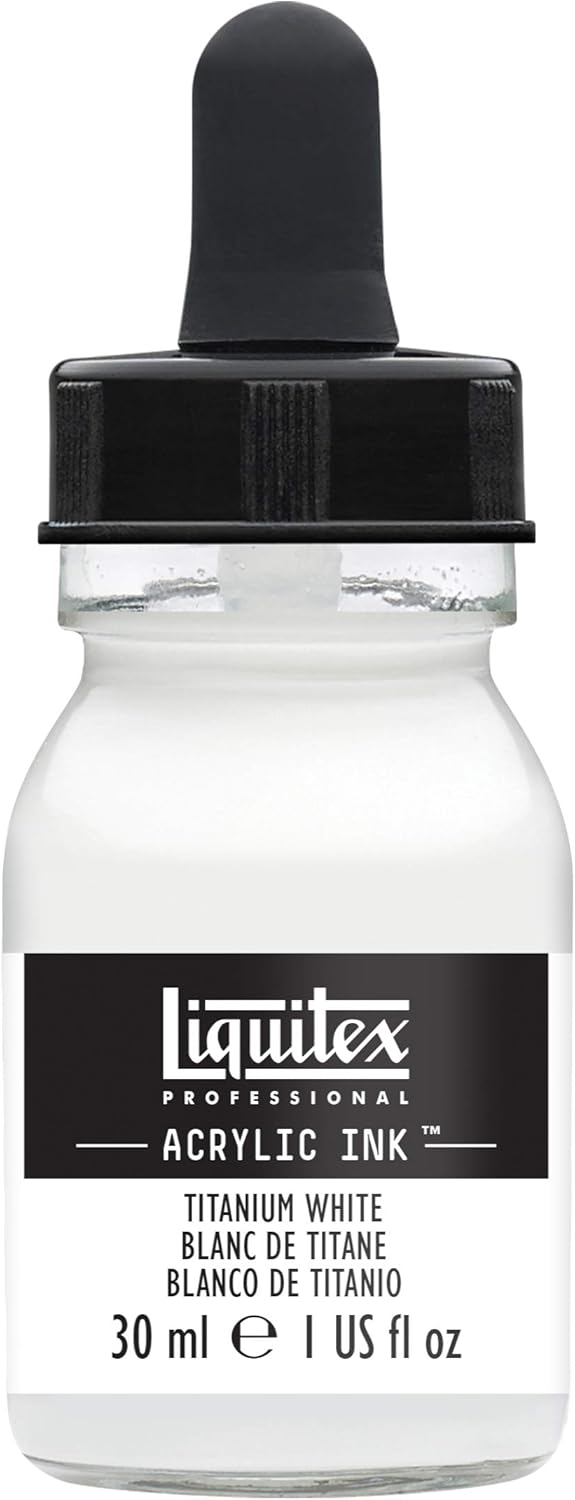
Standard white acrylic model paints use coarse titanium dioxide particles bound in thick gel resin—which is why they constantly clog airbrush nozzles and spit grainy white dots across black primer. Liquitex Professional Titanium White Ink suspends superfine artist-grade pigment in a fluid shellac-like acrylic medium that sprays straight out of the dropper bottle at 20 PSI with silky smoothness.
✅ Pros for Scale Modelers:
- Sprays directly through 0.2mm to 0.5mm airbrush nozzles with zero thinning required
- Blindingly bright opacity over black primer makes Yellow, Red, and Orange Contrast paints pop
- Also works as a capillary pin-wash for glowing plasma coils and sci-fi engine vents
❌ Cons to Consider:
- Delicate when freshly sprayed—let it cure for 30 minutes (or hit with a hairdryer) before heavy brushing
- Glass dropper pipette requires careful handling on crowded workbenches
5. Vallejo Surface Primer (Black 74.602 & USN Ghost Grey 74.615) — Best Polyurethane Foundation
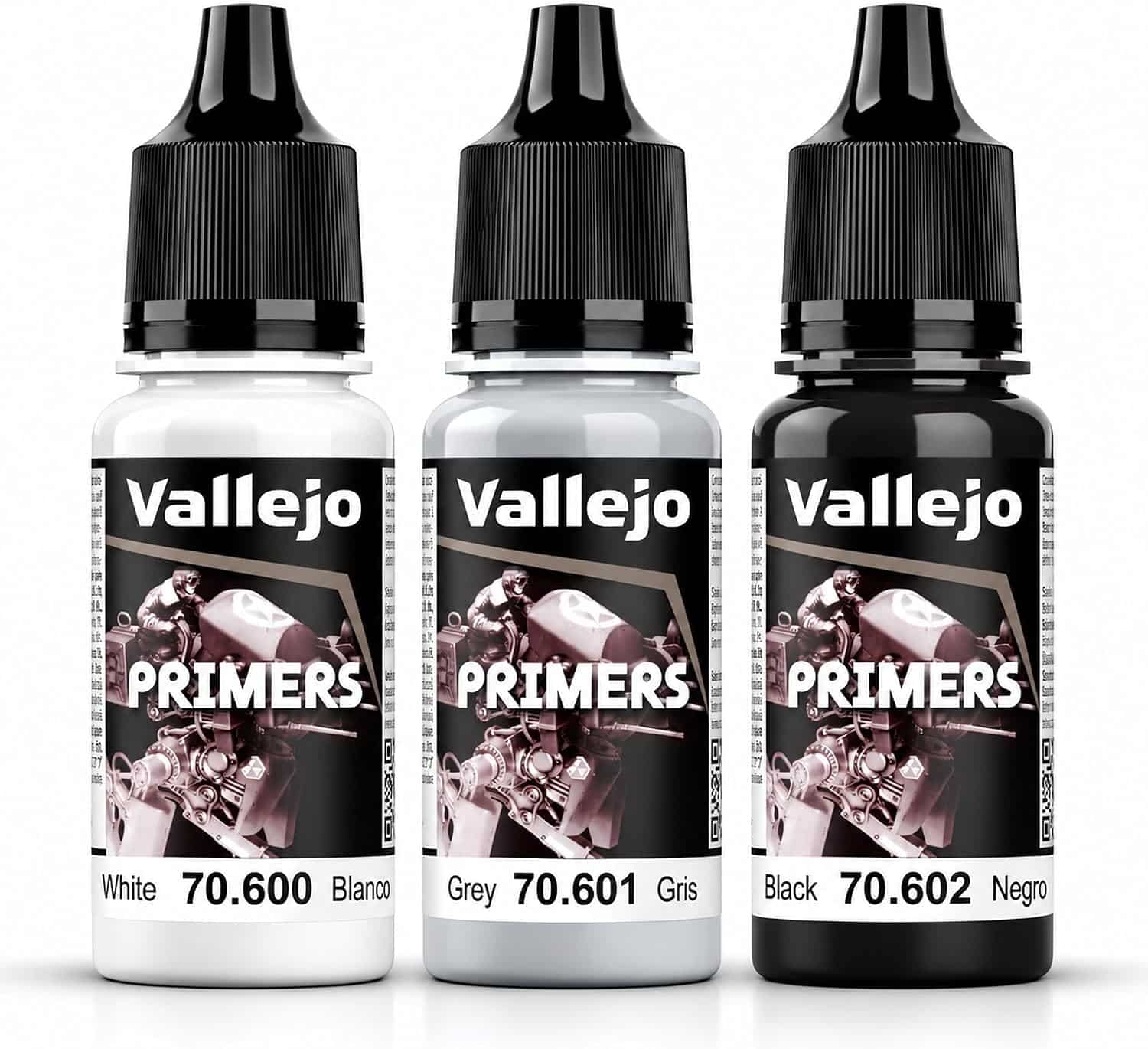
Whether you choose Slapchop or Zenithal, a thick hardware-store spray primer will clog miniature eyes, chainmail links, and 1/35 uniform insignia before you even begin. Vallejo Polyurethane Surface Primer shrinks drum-tight as it cures, preserving every micron of detail on polystyrene, photo-etch brass, and UV 3D resin.
✅ Pros for Scale Modelers:
- Dead-matte tooth grabs Speedpaint, Contrast, and drybrushed acrylics without beading up
- Water-based polyurethane formula has zero toxic lacquer fumes—safe for indoor hobby rooms
- Can be brushed straight onto small 1/35 figures or airbrushed across entire Warhammer squads
❌ Cons to Consider:
- Reaches maximum scratch resistance after curing overnight (12–24 hours recommended before heavy drybrushing)
- Mix with 10% Vallejo Airbrush Flow Improver to prevent tip-dry during long priming sessions
The Pro Hybrid Technique: “Zenithal + Slapchop” (Best of Both Worlds)
Why choose between smooth volumetric lighting and crisp edge definition when you can combine them in under three minutes per figure? Top competition painters and diorama masters featured in publications like Dioramag Vol. 17 use the Hybrid Value Sketch:
-
Step 1 (Airbrush Zenithal): Prime the miniature black and airbrush a smooth 45-degree cone of mid-tone grey (or warm ivory for flesh tones) to establish clean, grain-free volumetric gradients across smooth armor plates and cloaks.
-
Step 2 (Dome Drybrush Edge Pop): Instead of spraying white ink (which hits flat surfaces equally), take your Masterclass Dome Drybrush with pure titanium white and lightly drybrush only the sharp edges, rivets, weapon trims, and facial cheekbones.
-
Step 3 (Translucent Glaze + Pin Wash): Apply a single coat of Speedpaint or Contrast paint. Once dry, accentuate deep armor crevices using the safe methods outlined in our Tamiya Panel Line vs Ink Wash Showdown.
(Note: Before priming multi-part plastic or 3D resin figures, make sure your sub-assemblies are bonded with the right adhesive—check our guide on What’s the Best Glue for Plastic Models? to avoid glue frosting ruining your black undercoat!)
🛠️ Essential Workbench Accessories for Speed Painting
Want cleaner drybrush transitions and faster batch-painting across 20 miniatures at once? Add these four high-utility tools to your hobby desk:
- 🔹 Stop Using Paper Towels: Artis Opus / Game Envy Drybrush Texture Palette — Primed 3D textures let you test exact pigment load before touching your miniature, preventing chalky streaks.
- 🔹 Keep Dome Brushes Soft Forever: The Masters Brush Cleaner and Preserver (2.5 oz) — Dissolves dried acrylic primer trapped inside goat-hair ferrules in seconds.
- 🔹 Zero Finger Smudges While Priming: Citadel Colour Painting Handle XL / Rotating Grip — Holds 25mm to 50mm bases securely so skin oils never rub off your white edge highlights.
- 🔹 Thinning Contrast & Speedpaints cleanly: Citadel Contrast Medium / Speedpaint Medium — Essential for diluting intense pigments into subtle glazes for 1/35 military faces and uniform shading.
Frequently Asked Questions (FAQ)
Why does my Slapchop drybrushing look chalky and dusty under Speedpaint?
Chalkiness happens for two reasons: wiping your brush on dry paper towels (which strips away liquid acrylic binder, leaving raw pigment powder) and jumping straight from pure black to pure white. Always build a bridge with a heavy Mid-Tone Grey pass first, and lightly dampen a sponge—touching the back of your hand once before loading paint—so the bristles stay slightly cool and hydrated.
Can I use Slapchop or Zenithal Highlighting on 1/35 WWII and modern military figures?
Absolutely! While tabletop gamers use vibrant fantasy colors, 1/35 armor and diorama builders can prime figures in Red-Brown or Dark Olive Drab, drybrush with Warm Buff / Iraqi Sand instead of cold grey, and glaze over the top with thinned Vallejo acrylics or oil washes. Using a warm ivory undercoat keeps olive drab uniforms and human skin tones looking warm and natural rather than desaturated.
Which is better for Space Marines and smooth armor: Slapchop or Zenithal?
For smooth, flat surfaces like Warhammer 40K Space Marines, T’au battlesuits, or 1/35 tank turrets, Zenithal Highlighting (or the Hybrid Method) wins hands-down. Heavy drybrushing across wide, flat panels can leave micro-streaks that show through translucent paints, whereas an airbrushed zenithal gradient keeps flat armor plates silky smooth.
