
How to Thin Vallejo, Citadel & Tamiya Paints for Airbrush (2026 Chart)

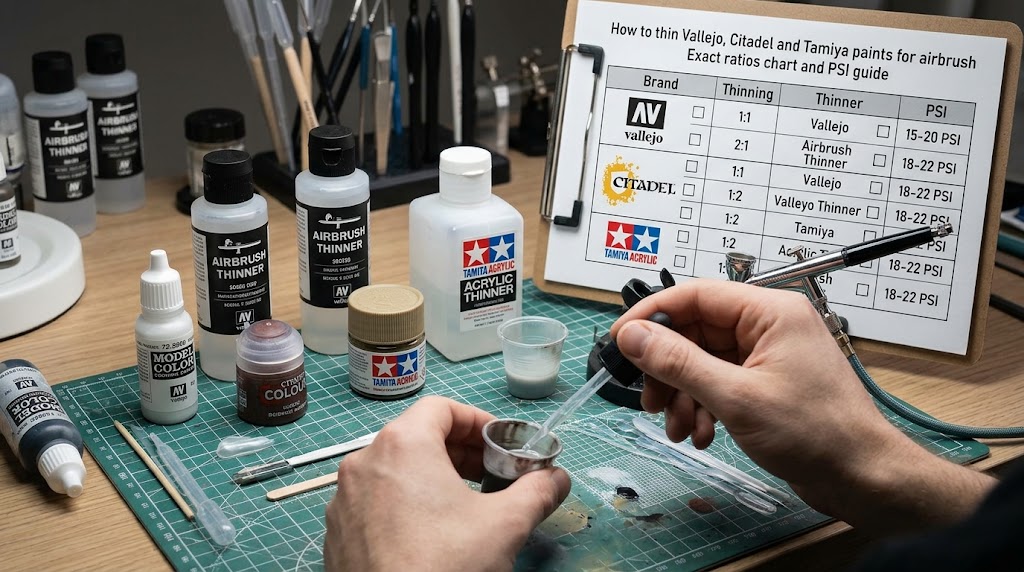
How to Thin Vallejo, Citadel & Tamiya Paints for Airbrush (2026 Exact Ratios Chart)
Mastering how to thin Vallejo, Citadel and Tamiya paints for airbrush is the single biggest turning point between frustrating nozzle clogs and a silky-smooth factory finish. Almost every beginner airbrush problem—whether it is grainy “orange peel” texture, spiderwebbing legs across armor plates, or constant needle tip-dry—has nothing to do with the airbrush itself. Instead, it comes down to mismatching paint resin chemistry with the wrong solvent or spraying at the wrong compressor PSI.
While all three brands say “Acrylic” on the label, Vallejo and Citadel are true water-based emulsion acrylics, whereas Tamiya X/XF and Mr. Hobby Aqueous are solvent-based alcohol/lacquer hybrid acrylics. Whether you are basecoating a newly announced Leopard 2A8 vs Leopard 2A7V in 1/35 Scale, laying down a metallic sheen from our F-16V Block 70 vs Block 52+ Modeling Guide, or zenithal priming Warhammer miniatures, use this exact 2026 workbench ratio chart to dial in your mix every time.
Disclosure: Hobbyzero is reader-supported. When you buy through links on our site, we may earn an affiliate commission at no extra cost to you. As an Amazon Associate, we earn from qualifying purchases.
⚡ Key Takeaways: Airbrush Thinning Ratios & Chemistry Rules (2026)
- The “Skim Milk” Consistency Rule: Properly thinned airbrush paint should flow down the side of a metal mixing cup like cold skim milk (1% milk), leaving a translucent tint without beading up or running like pure water.
- Never Put IPA or X-20A in Vallejo: Mixing Isopropyl Alcohol (IPA) or Tamiya X-20A into water-based Vallejo Model Color causes immediate polymer shock, turning the paint into rubbery cottage cheese that clogs your nozzle.
- The Secret Weapon for Tamiya X/XF: Swap standard X-20A alcohol thinner for Mr. Color Leveling Thinner (1:1 to 1:1.5 Paint-to-Thinner) to eliminate tip-dry and achieve self-leveling lacquer smoothness.
- The Vallejo “Golden Sauce” Mix: Combine 80% Vallejo Airbrush Thinner + 20% Vallejo Flow Improver in a separate dropper bottle to delay needle drying during long miniature and armor sessions.
2026 Master Airbrush Thinning Ratios & PSI Chart (By Paint Line)
| Paint Brand & Line | Ratio (Paint : Thinner) | Best Compatible Thinner | Target PSI | Nozzle Size |
|---|---|---|---|---|
| Vallejo Model Color / Game Color | 1 : 1 to 1 : 1.5 (50/50) | 80% Vallejo Thinner + 20% Flow Improver | 18 – 22 PSI | 0.3mm – 0.45mm |
| Vallejo Model Air / Mecha Color | 4 : 1 (4 drops paint : 1 thinner) | Vallejo Flow Improver + Thinner | 15 – 18 PSI | 0.2mm – 0.35mm |
| Citadel Base (Games Workshop) | 1 : 1 to 1 : 1.5 | Vallejo Thinner + 1 drop Flow Improver | 20 – 25 PSI | 0.35mm – 0.5mm |
| Citadel Layer / Contrast / Speedpaint | 2 : 1 (Contrast sprays neat) | Vallejo Thinner / Contrast Medium | 15 – 20 PSI | 0.2mm – 0.35mm |
| Tamiya Acrylics (X & XF Jars) | 1 : 1 (Base) / 1 : 2 (Mottling) | Mr. Color Leveling Thinner or Tamiya X-20A | 12 – 18 PSI | 0.2mm – 0.35mm |
| Vallejo Polyurethane Surface Primer | 5 : 1 (5 drops primer : 1 thinner) | Vallejo Flow Improver | 22 – 28 PSI | 0.4mm – 0.5mm |
2026 Top 5 Airbrush Thinners, Flow Improvers & Cleaners Compared
| Product Name | Chemical Type | Compatible Paint Brands | Key Workbench Benefit | Check Price |
|---|---|---|---|---|
| Vallejo Airbrush Thinner (200ml) | Water-Based Acrylic Medium | Vallejo, Citadel, Army Painter, AK 3G | Thins pigment without breaking acrylic binder adhesion | View on Amazon |
| Vallejo Airbrush Flow Improver (200ml) | Retarder & Surfactant | All Water-Based Acrylics & Primers | Stops paint drying on the needle tip mid-session | View on Amazon |
| Mr. Color Leveling Thinner (400ml) | Retarded Lacquer Solvent | Tamiya X/XF, Mr. Hobby Aqueous, Mr. Color | Eliminates orange peel for glass-smooth Tamiya coats | View on Amazon |
| Tamiya X-20A Acrylic Thinner (250ml) | Alcohol Hybrid Solvent | Tamiya X & XF Acrylics, Mr. Hobby Aqueous | Low-odor factory solvent for dead-flat military finishes | View on Amazon |
| Iwata Medea Airbrush Cleaner (16 oz) | Surfactant Flush Solution | All Water-Based & Alcohol Acrylics | Dissolves dried acrylic ring inside cup without harming O-rings | View on Amazon |
Step-by-Step: How to Thin Each Paint Brand Without Clogging
If you are transitioning from brush painting (covered in our Painting Models with Acrylic Paint Beginner’s Guide) to airbrushing, never pour thick paint straight into a dry airbrush cup first—it immediately sinks into the tiny nozzle channel unthinned. Always put 3 to 4 drops of thinner/flow improver into the cup before adding your paint!
1. Vallejo (Model Color, Game Color & Model Air)
-
Why It Clogs: Water-based emulsion acrylics cure via water evaporation. As compressed air rushes past the needle tip at 20 PSI, it dries the microscopic film of paint on the needle in 10 seconds (“tip-dry”).
-
The Fix (“Golden Sauce” Recipe): Take an empty 30ml dropper bottle and mix 80% Vallejo Airbrush Thinner + 20% Vallejo Flow Improver. Use this blend at a 1:1 ratio with Model Color (or 1 part mix to 4 parts Model Air).
-
CRITICAL WARNING: Never put Isopropyl Alcohol (IPA), Windex, or Tamiya X-20A into Vallejo! Alcohol shocks the latex/vinyl copolymer emulsion, turning the paint into sticky rubber strings that require a full nozzle teardown.
2. Citadel / Games Workshop Paints (Base, Layer & Contrast)
-
Transferring from the Pot: Never pour directly from a Citadel flip-top pot into your airbrush cup—dried paint crusts around the rim will fall into your nozzle and jam it instantly. Use an old brush or plastic pipette to transfer paint into a mixing cup.
-
Citadel Base Paints: High pigment density means Base paints (like Mephiston Red or Macragge Blue) need a 1:1 to 1:1.5 (Paint : Vallejo Thinner) mix sprayed at 20–25 PSI.
-
Citadel Layer & Contrast Paints: Layer paints only need a 2:1 (Paint : Thinner) ratio. Citadel Contrast and Army Painter Speedpaint 2.0 are already airbrush-thin right out of the bottle—spray them neat at 15–18 PSI over a grayscale undercoat from our Slapchop vs Zenithal Highlighting Guide.
3. Tamiya Acrylics (X Gloss & XF Flat Jars) & Mr. Hobby Aqueous
-
Why Tamiya Sprays Like a Dream: Unlike Vallejo, Tamiya X/XF paints use an alcohol-soluble acrylic resin that does not suffer from rapid needle tip-dry.
-
Option A – Low Odor (Tamiya X-20A): Thin 1:1 (50% Paint / 50% X-20A) for general 1/35 armor and 1/48 aircraft basecoats at 15–18 PSI. Add 1 drop of Tamiya Paint Retarder Acrylic if spraying gloss colors (like X-1 Black or X-22 Clear).
-
Option B – Pro Secret (Mr. Color Leveling Thinner): Thin Tamiya X/XF 1:1 to 1:1.5 with Mr. Color Leveling Thinner (MLT). The mild lacquer retarder melts the pigment into a self-leveling satin sheet that grips bare styrene and 3D-printed parts from our Best Resin 3D Printers for Scale Models Guide with zero orange peel. (Always wear a respirator mask with organic vapor cartridges when spraying MLT!)
Top 5 Essential Airbrush Thinners & Additives Breakdown (Pros & Cons)
1. Vallejo Airbrush Thinner (200ml) — Best All-Round Thinner for Water-Based Acrylics
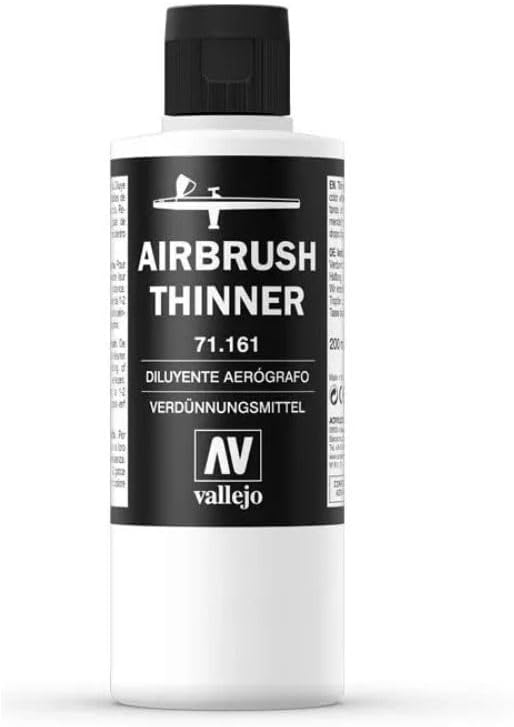
Why can’t you just thin Vallejo or Citadel paints with tap water? When you dilute acrylic paint past 30% with plain water, you break the acrylic resin matrix—causing the paint to bead up (“spiderweb”) on hydrophobic plastic and rub off at the slightest touch. Vallejo Airbrush Thinner (71.161) contains suspended liquid acrylic binder, letting you thin heavy brush paints down to skim-milk consistency while maintaining rock-solid surface grip.
✅ Pros for Scale Modelers:
- 100% compatible with Vallejo, Citadel, Army Painter, Ammo by Mig, and AK 3rd Gen acrylics
- Maintains matte finish integrity and surface adhesion even at 1:2 glaze dilutions
- Odorless and non-toxic—safe for apartment workbenches and indoor hobby rooms
❌ Cons to Consider:
- Used alone in dry climates, it can still allow mild tip-dry unless blended with 20% Flow Improver
- Not compatible with solvent-based Tamiya X/XF or Mr. Color lacquers
2. Vallejo Airbrush Flow Improver (200ml) — The Ultimate Cure for Needle Tip-Dry
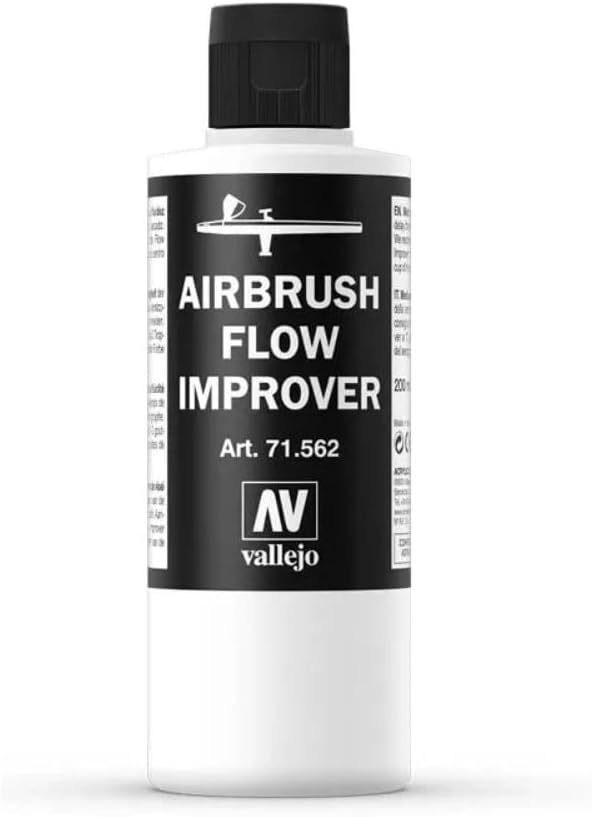
Many beginners confuse Thinner with Flow Improver. While thinner reduces viscosity, Vallejo Airbrush Flow Improver (71.562) is a dual-action drying retarder and surface-tension breaker. Adding 10% to 20% Flow Improver into your thinner mix slows the drying time on the metal needle tip by several minutes, eliminating sputtering and allowing ultra-fine 1/48 Luftwaffe mottling lines.
✅ Pros for Scale Modelers:
- Eliminates 90% of needle tip-dry when spraying Vallejo Surface Primer or Citadel Base paints
- Lubricates the internal needle packing seal for buttery-smooth trigger pull action
- A single 200ml bottle lasts over a year when mixed at a 20% ratio
❌ Cons to Consider:
- Do not use as a 100% standalone thinner—exceeding 25% can make paint stay tacky for hours
- Requires lighter mist coats to avoid pooling in recessed rivets
3. GSI Creos Mr. Color Leveling Thinner (400ml) — Liquid Gold for Tamiya & Lacquers
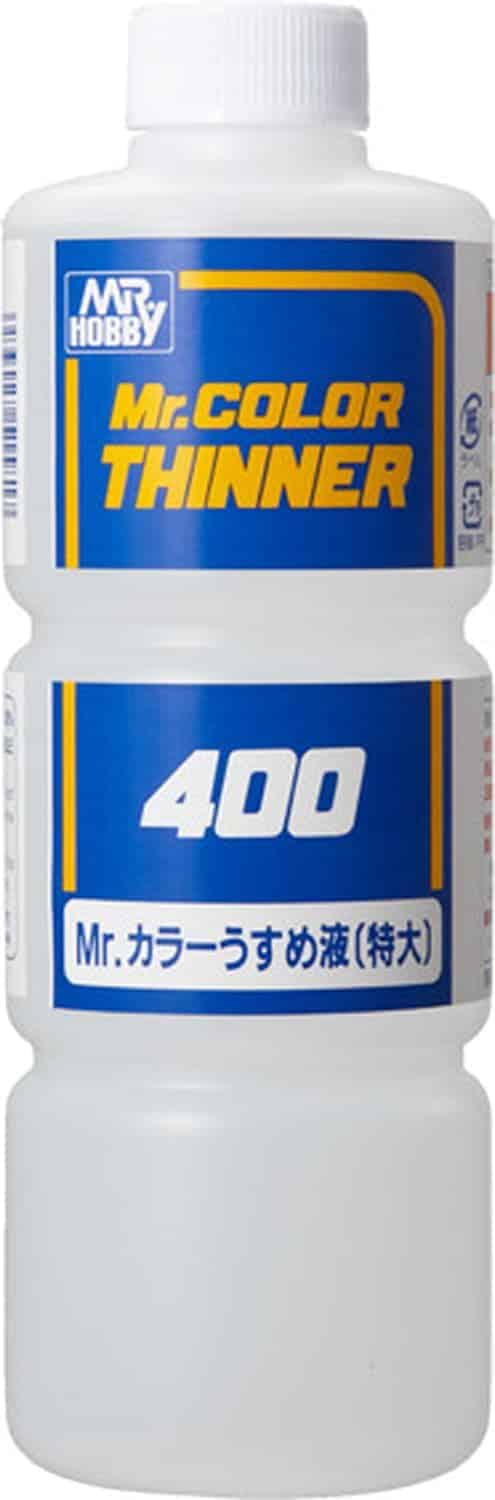
Ask any competition aircraft or armor builder for their desert-island product, and 9 out of 10 will point to the yellow bottle of Mr. Color Leveling Thinner (MLT). Formulated with a built-in drying retarder, it thins Tamiya X/XF acrylics, Mr. Hobby Aqueous, Mr. Color lacquers, and Mr. Surfacer 1500 primer into a self-leveling micro-film that refuses to dry gritty in mid-air—even on hot summer days.
✅ Pros for Scale Modelers:
- Eliminates grainy dusting in tight wing roots and turret corners on 1/48 and 1/35 kits
- Allows 1:3 super-thin Tamiya post-shading and panel fading at 10–12 PSI with zero spatter
- Creates a tough, scratch-resistant finish ready for masking tape in 30 minutes
❌ Cons to Consider:
- Strong lacquer fumes require an exhaust spray booth and organic vapor respirator mask
- Never mix with water-based Vallejo or Citadel paints (will curdle them immediately)
4. Tamiya X-20A Acrylic Thinner (250ml) — Best Low-Odor Thinner for Dead-Flat Armor Finishes
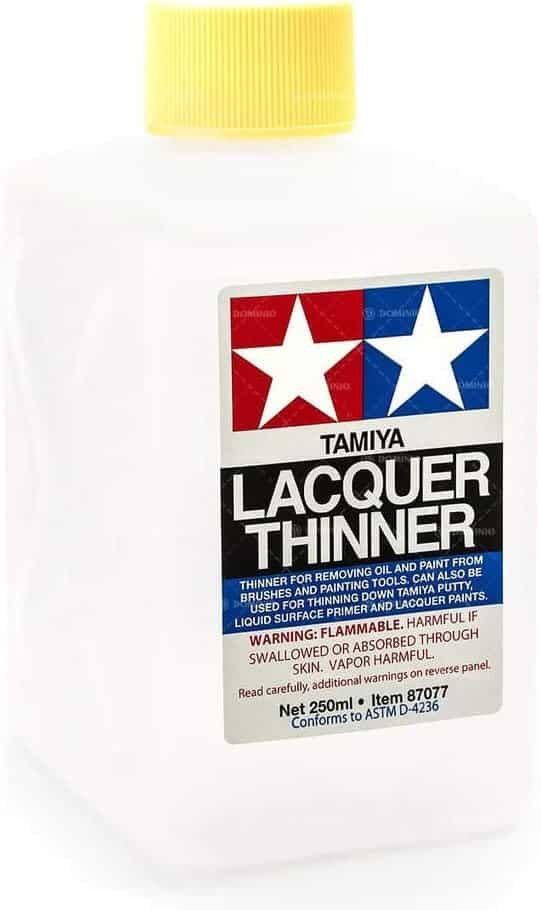
If you cannot spray lacquer solvents indoors—or if you want to preserve the dead-flat chalky military sheen of Tamiya XF colors on WWII armor and figures—Tamiya X-20A Acrylic Thinner is the factory-engineered solution. Unlike raw hardware-store rubbing alcohol, X-20A blends alcohol solvents with specialized flow modifiers and leveling agents so paint doesn’t dry into powdery dust before hitting the plastic.
✅ Pros for Scale Modelers:
- Mild alcohol scent dissipates rapidly compared to heavy cellulose lacquer thinners
- Safe to spray directly over delicate water-based acrylic layers without melting them
- Works equally well for Tamiya X/XF, Mr. Hobby Aqueous, and AK Real Colors
❌ Cons to Consider:
- Wait 10 minutes between heavy coats—flooding X-20A too wet can reactivate the bottom layer
- White cap (X-20A Acrylic) must never be confused with the Blue cap (X-20 Enamel Thinner)!
5. Iwata Medea Airbrush Cleaner (16 oz) — Best Non-Corrosive Flush Between Colors
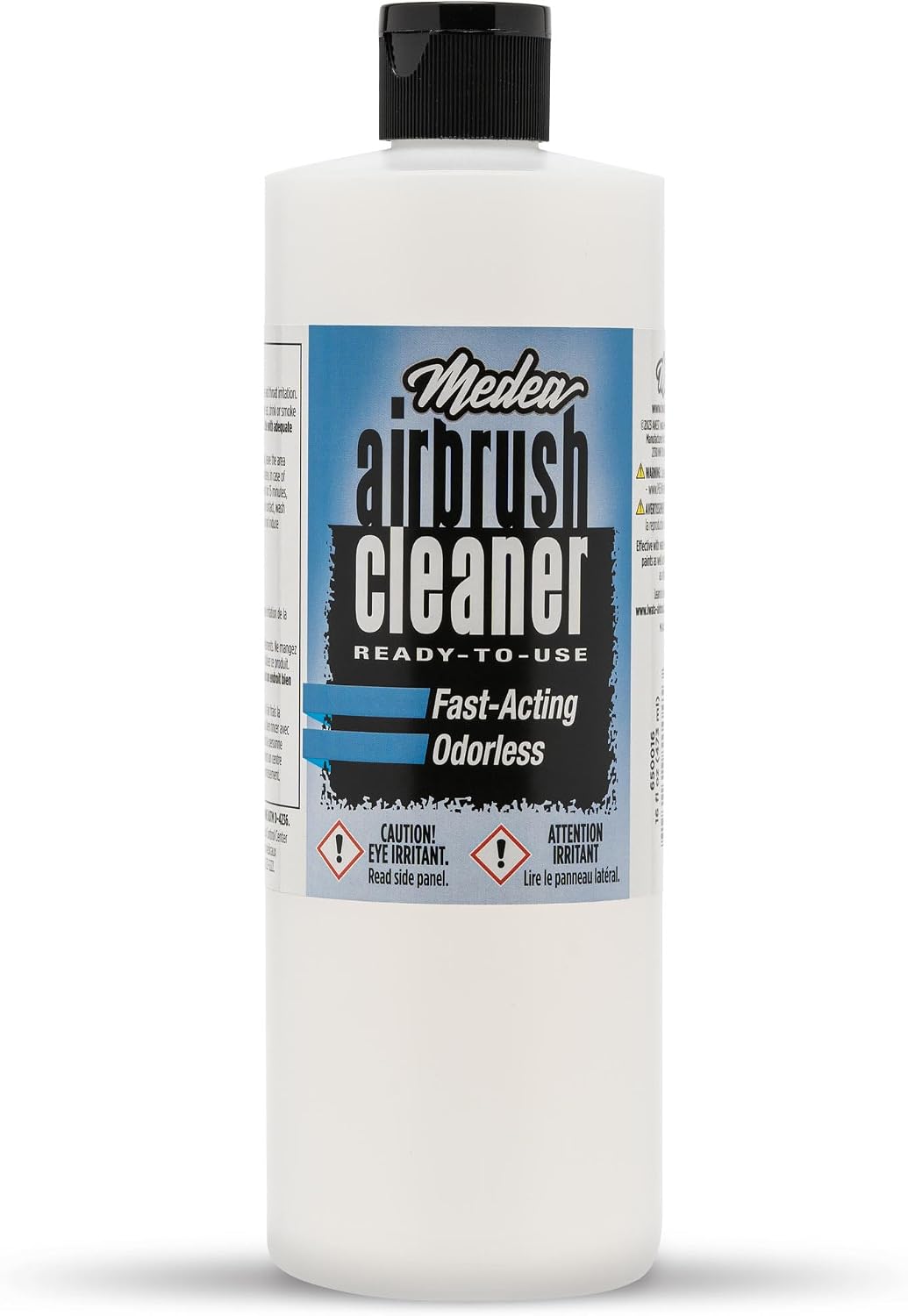
Even perfectly thinned paint will cause spattering on your next session if micro-flakes of dried pigment remain stuck inside the nozzle cone. Unlike harsh window cleaners containing ammonia (which strip chrome plating off brass airbrush cups), Iwata Medea Airbrush Cleaner is a high-strength, ammonia-free surfactant flush that melts Vallejo, Citadel, and Tamiya X/XF residue in seconds.
✅ Pros for Scale Modelers:
- 100% safe for PTFE, nitrile O-rings, and delicate chrome plating inside premium airbrushes
- Doubles as an ultrasonic cleaner fluid for deep-cleaning clogged nozzles
- Economical 16 oz (473ml) workbench bottle lasts for hundreds of color changes
❌ Cons to Consider:
- Always blow 3 drops of plain water or thinner through the brush after cleaning so surfactant residue doesn’t thin your next color!
- For pure cellulose lacquers (Mr. Color), follow up with a final hardware lacquer thinner rinse
Troubleshooting: 3 Visual Clues Your Paint-to-PSI Balance Is Off
Once your paint is mixed and you pull the trigger on a scrap plastic spoon, the spray pattern tells you immediately what to adjust before touching your model:
-
Spiderwebbing (Centipede Legs): Paint hits the plastic and blows outward in spidery legs. Cause: Your paint is too thin for your air pressure, or you are holding the airbrush too close. Fix: Drop your compressor pressure to 12–15 PSI, back up 3 inches, and mist in light passes.
-
Speckling / Grainy Sandpaper Texture: Tiny dots surround the edges of your spray cone. Cause: Paint is too thick for the current PSI, or dried paint has built up on the needle tip. Fix: Swab the needle tip with a brush dipped in thinner, add 3 drops of thinner, or bump pressure up by 3–5 PSI.
-
Clear Gloss & Panel Lining Prep: Once your basecoat is down, thin your clear gloss varnish 1:1.5 (Varnish : Leveling Thinner) so your enamel washes glide effortlessly using the methods in our How to Panel Line Gunpla & Scale Models Without Cracking Plastic Guide and Tamiya Panel Line vs Ink Wash Showdown.
🛠️ Essential Airbrush Mixing & Cleaning Workbench Kit
Never mix unknown paint ratios directly inside your airbrush cup! Mixing externally prevents unthinned pigment lumps from jamming your nozzle:
- 🔹 External Skim-Milk Testing: Stainless Steel Metal Paint Mixing Cups with Spout (12-Pack) — Lets you swirl paint and check exact “skim milk” runoff down the polished steel wall before pouring into your airbrush.
- 🔹 Transfer Citadel Pots Cleanly: Graduated 3ml Plastic Transfer Pipettes (100-Pack) — Measure exact thinner ratios and pull paint out of Citadel flip-top pots without dropping dried rim crusts into your nozzle.
- 🔹 Zero-Mist Indoor Cleaning: 3-in-1 Glass Airbrush Cleaning Pot with Filter & Holder — Spray cleaner between color swaps with zero airborne fumes or overspray on your desk.
- 🔹 Revive Settled Dropper Bottles: Mini Lab Vortex Paint Mixer + 100 Stainless Steel Mixing Balls — Homogenizes separated Vallejo and Citadel pigments in 5 seconds flat.
Frequently Asked Questions (FAQ)
Why does Vallejo paint turn into rubbery gum when mixed with Isopropyl Alcohol (IPA) or Tamiya X-20A?
Vallejo Model Color, Game Color, and Model Air use a 100% water-based vinyl/acrylic copolymer emulsion. When exposed to high-percentage Isopropyl Alcohol (IPA) or alcohol-based Tamiya X-20A thinner, the alcohol rapidly dehydrates and shocks the polymer chains—causing the binder to coagulate into sticky, cottage-cheese strings that instantly block airbrush nozzles. Always thin Vallejo exclusively with Vallejo Airbrush Thinner and Flow Improver (or distilled water).
Do I still need to thin “Airbrush-Ready” paints like Vallejo Model Air or Citadel Air?
Yes, in most cases! While “Air” paints are pre-thinned at the factory to spray through large 0.4mm to 0.5mm nozzles at 22+ PSI, spraying them through a standard 0.2mm or 0.3mm detail airbrush at 15–18 PSI still requires adding 1 drop of Flow Improver + 1 drop of Airbrush Thinner per 4 to 5 drops of paint to prevent needle tip-dry.
Can I thin Tamiya X and XF acrylic paints with water?
While you can add 1 or 2 drops of water when hand-brushing small details, thinning Tamiya X/XF with water for an airbrush creates high surface tension, causing the paint to bead up on bare styrene plastic and dry sluggishly. For airbrushing, always thin Tamiya X/XF 1:1 with Tamiya X-20A Acrylic Thinner or Mr. Color Leveling Thinner.
